Flat & Commercial Roofing
TPO and modified bitumen systems installed with the coordination and precision that low-slope roofing actually demands.

Protect Your Property With a Low-Slope Roof Done Right
We specialize in TPO (Thermoplastic Polyolefin) and modified bitumen systems for both residential and commercial applications. These roofs carry HVAC equipment, electrical conduits, plumbing vents, and drainage systems, all of which create penetrations that have to be planned, flashed, and integrated into the roofing assembly from the start. Not patched in after the fact.
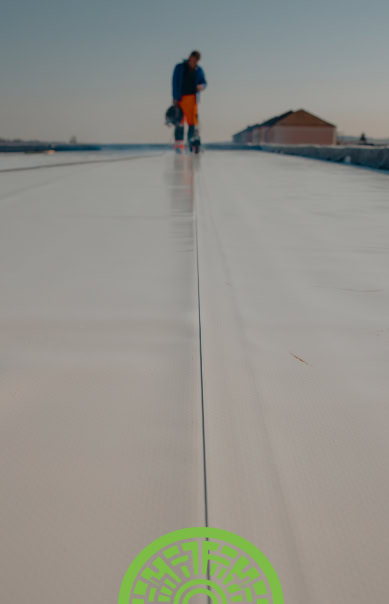
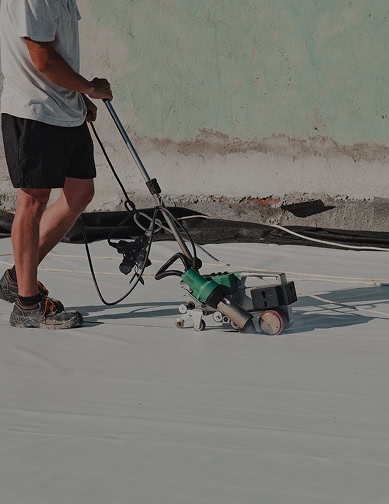
We build the waterproofing layer first. A self-adhered peel-and-stick underlayment bonds directly to the roof deck, sealing the substrate and creating a continuous secondary water barrier before any membrane goes on. Our TPO systems are then installed with precision heat-welded seams, forming a single monolithic membrane that resists UV exposure, ponding water, and the thermal expansion Florida’s climate demands of a roof every day.
What truly sets our approach apart is our ability to work in coordination with other trades. Electricians, HVAC contractors, plumbers: we plan alongside them, not around them. Every penetration gets properly flashed and sealed as the system is built, not after problems show up.
- TPO and modified bitumen systems
- Peel-and-stick underlayment bonded to the deck
- Precision heat-welded TPO seams creating a monolithic, seamless membrane
When You Need to Address Your Flat or Commercial Roof
Age-Related Deterioration
- TPO membrane showing brittleness, cracking, or visible seam separation
- Modified bitumen surface bubbling, alligatoring, or pulling away at edges
- Repeated patching with no lasting result
- A system past its expected service life with maintenance costs climbing
Storm Damage and Water Intrusion
- Standing water or drainage failures following a heavy rain event
- Interior water stains or ceiling damage with no obvious entry point
- Flashing around HVAC units, vents, or conduits that has lifted or cracked
- Wind uplift damage to the membrane or any installed equipment curbing
Penetration and Trade-Related Failures
- Leaks traced back to HVAC, electrical, or plumbing penetrations
- Pipe boots, goosenecks, or conduit entries that were never properly integrated into the roofing system
- Equipment additions made after the original installation with no re-flashing
- A roof that has been patched around mechanical equipment multiple times
Performance and Efficiency Concerns
- High cooling costs tied to a roof with poor UV resistance or degraded insulation
- Preparing a commercial property for sale or lease and needing a roof that passes inspection
- An older modified bitumen system that no longer meets current energy or building code standards
- Ready to move from a maintenance-dependent roof to a fully engineered system
Have any of these issues?
We will inspect your roof thoroughly, explain exactly what we find, and give you a straight answer.
Your Roof Problems aren't Getting Smaller
A small seam separation or an unflashed penetration doesn’t announce itself until water has already found a path through the system. On a flat roof, damage can spread laterally beneath the membrane for weeks before it shows up on a ceiling. By then, the insulation, the decking, and sometimes the structural framing below are already involved.
Low-slope roofing problems are solvable. The earlier they’re addressed, the smaller the scope of work. We’ll tell you exactly where things stand.
Get a Free Quote
- No obligation